
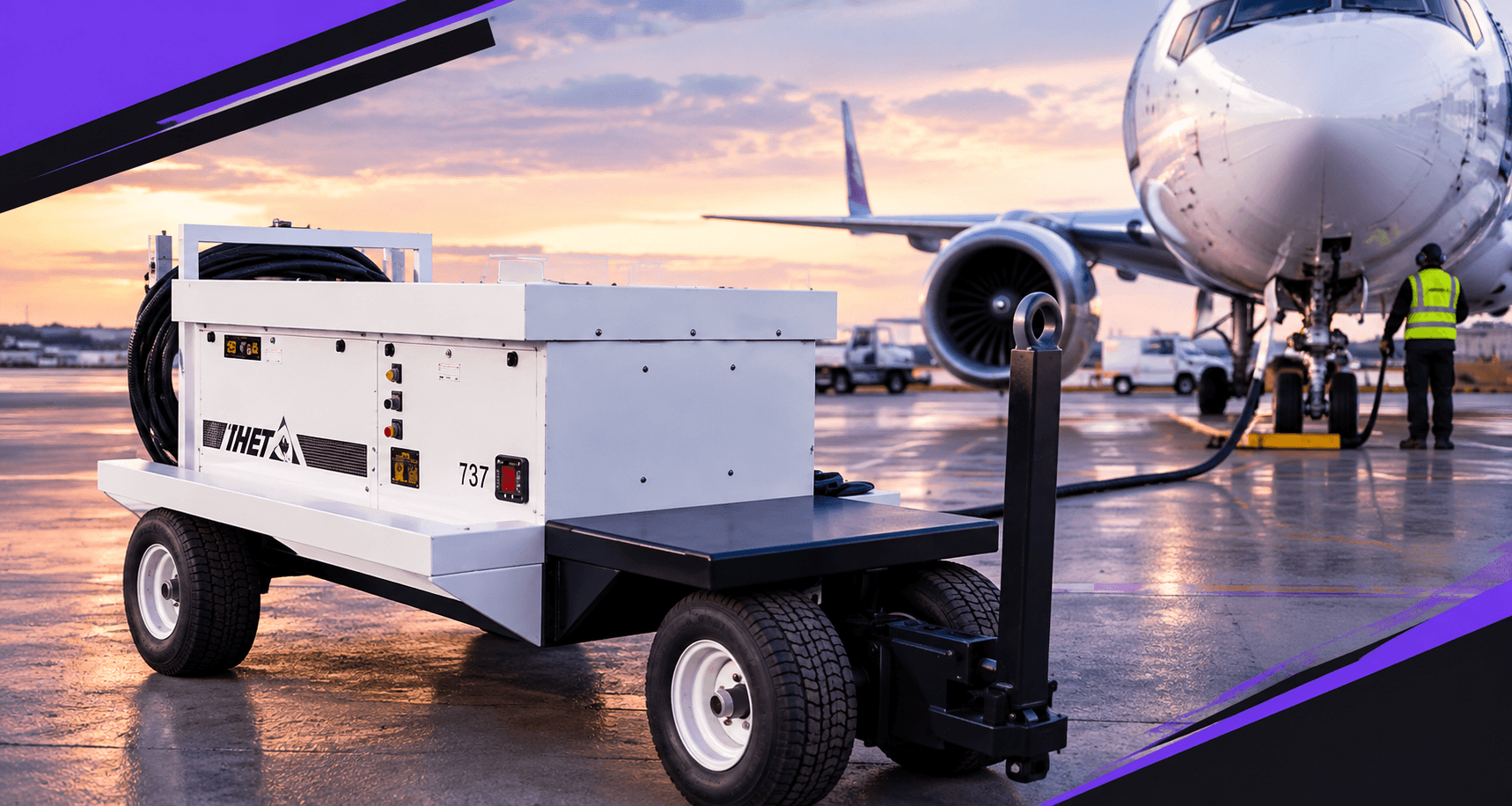
In commercial aviation, the clock never really stops. From the moment an aircraft rolls onto the stand to the second it pushes back for departure, a tightly choreographed sequence of tasks has to happen — passengers off and on, bags unloaded and reloaded, cabin serviced, fuel taken on, power supplied, systems checked. That window is called the turnaround, and it’s where airlines quietly win or lose money, on-time performance, and passenger goodwill. The equipment that makes it all happen, safely and on schedule, is ground support equipment.
For ground handlers and airlines, the right
ground support equipment
is the difference between a smooth, profitable operation and one plagued by delays and safety risks. Here’s how GSE drives both efficiency and safety on the ramp — and why the quality of that equipment matters more than most people realize.
Why Aircraft Turnaround Time Is So Critical
An aircraft only earns revenue when it’s flying. Every extra minute on the ground eats into profitability, ripples through the day’s schedule, and risks knock-on delays across an entire network. A fast, reliable turnaround lets airlines maximize aircraft utilization, hit their slots, and keep passengers moving. But speed alone isn’t the goal — the turnaround has to be quick and safe, because the ramp is one of the most hazardous environments in the industry. That balance is exactly what good ground support equipment is built to deliver.
How GSE Drives Turnaround Efficiency
A turnaround is really dozens of parallel jobs, each with its own purpose-built equipment. When every piece performs reliably, the whole operation flows.
Power and Air on Demand
A parked aircraft still needs electrical power and conditioned air, and running the onboard APU to provide it burns costly fuel and adds wear.
Ground power units
and
air start units
supply stable power and engine-start air externally, keeping systems live and the cabin comfortable while cutting fuel use during the turnaround.
Moving the Aircraft
Getting the aircraft on and off the stand quickly and precisely is essential.
Tugs and pushback tractors
— including towbarless models — handle repositioning and departure pushback efficiently, so the aircraft isn’t waiting on the crew or vice versa.
Baggage and Cargo Handling
Loading and unloading is often the pacing item of a turnaround.
Belt loaders,
baggage carts, tugs, and cargo loaders move bags and freight quickly between the aircraft and terminal, keeping this critical path on schedule. Well-maintained handling equipment keeps the bottleneck from becoming a delay.
Passengers and Cabin Servicing
Passenger stairs, boarding ramps, catering trucks, and lavatory and potable water units keep boarding, deplaning, and cabin servicing moving in parallel with everything else. When each of these runs smoothly, the many jobs of a turnaround overlap instead of stacking up.
How GSE Improves Ramp Safety
Efficiency means nothing if it comes at the cost of safety. The ramp is crowded with moving vehicles, personnel, and a multi-million-dollar aircraft, and ground incidents are a serious, costly problem industry-wide. Reliable, well-maintained GSE reduces that risk in several ways:
- Fewer equipment failures mean fewer sudden stoppages and hazards during time-pressured operations
- Precise, responsive controls on tugs and loaders reduce the risk of contact damage to the aircraft
- Proper power and air supply avoids improvised workarounds that introduce risk
- Purpose-built stairs and platforms protect crews and passengers during boarding and servicing
- Properly trained operators — equipment is only as safe as the people using it, which is why operator training matters as much as the machine
Maintenance: The Link Between Efficiency and Safety
Efficiency and safety share a common foundation: well-maintained equipment. A belt loader with a slipping drive, a tug with worn brakes, or a GPU with an intermittent fault doesn’t just slow a turnaround — it creates a hazard. Proactive upkeep and quality
GSE parts
keep equipment dependable and safe. Even routine care matters; our guide on
maintaining and cleaning your baggage carts for long-term use
is a good example of how small habits protect both performance and lifespan.
Cost-Effective GSE Solutions for Every Operation
Building and maintaining a GSE fleet is a major investment, and not every operation needs to buy new. The smartest fleets mix and match to match equipment to need and budget:
- New, used, and zero-timed equipment to balance performance against cost
- Rental and leasing to cover seasonal peaks, new routes, or short-term needs without a full purchase
- Consignment options to turn surplus equipment into value
- Reliable parts and technical support to maximize uptime and extend equipment life
- Fleet management tools to improve visibility, consistency, and compliance across the fleet
Flexible options like
GSE rental and leasing
let operations scale up quickly and keep costs predictable — a practical way to stay efficient without overcommitting capital.
Why Choose NEA for Your Ground Support Equipment
With over 50 years in the aviation industry, North East Aviation (NEA) helps ground handlers, airlines, and aircraft manufacturers worldwide keep their operations running smoothly. Partners choose NEA for:
- 50+ years of proven experience across the global aviation industry
- A comprehensive GSE catalogue — from GPUs and tugs to loaders, stairs, deicers, and more
- Flexible sales, rental, leasing, and consignment to fit any budget and need
- Expert technical support and quality parts to keep your fleet reliable
- Operator training and fleet management tools to protect your investment and your people
Keep Your Ground Operations Running Smoothly
Whether you’re expanding your fleet, covering a seasonal peak, or sourcing hard-to-find equipment, NEA has the ground support equipment and expertise to keep your turnarounds fast, safe, and cost-effective. Explore our full range or reach out to our team today.
Call 905-795-1998
| 1883 Bonhill Rd, Mississauga, ON | Serving aviation worldwide for 50+ years
Frequently Asked Questions
What is ground support equipment (GSE)?
Ground support equipment is the range of vehicles and machines used to service aircraft while they’re on the ground between flights. It includes ground power units, tugs and pushback tractors, belt loaders, baggage carts, air start units, passenger stairs, deicers, catering and lavatory units, and much more — everything needed to keep aircraft ground operations running.
How does GSE reduce aircraft turnaround time?
A turnaround is made up of many parallel tasks — power supply, aircraft movement, baggage and cargo handling, boarding, and cabin servicing. Purpose-built, reliable GSE lets these jobs happen quickly and simultaneously rather than stacking up, which keeps the aircraft on schedule and maximizes its time in the air.
How does ground support equipment improve ramp safety?
Reliable, well-maintained GSE reduces the risk of equipment failures, contact damage to aircraft, and improvised workarounds during time-pressured operations. Precise controls, purpose-built platforms and stairs, and proper power supply all contribute to a safer ramp — as does training operators to use the equipment correctly.
Is it better to buy or rent ground support equipment?
It depends on your operation. Buying (new, used, or zero-timed) suits long-term, steady needs, while renting or leasing is ideal for seasonal peaks, new routes, or short-term requirements without a large capital outlay. Many operations use a mix to keep costs efficient and their fleet flexible.
Does NEA supply GSE worldwide?
Yes. For over 50 years, NEA has provided GSE sales, rentals, leasing, and support to ground handlers, airlines, and aircraft manufacturers across the globe. If you need equipment that isn’t listed on our site, our team can help source it — just get in touch.